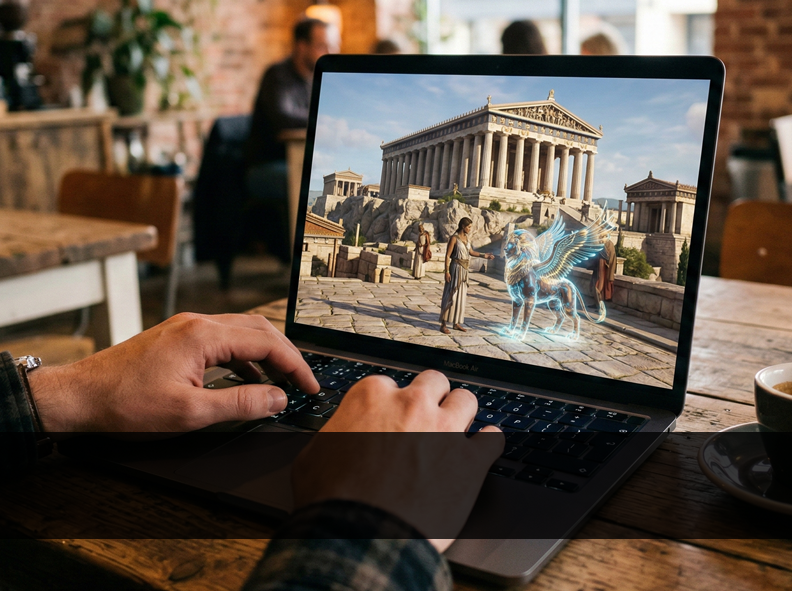


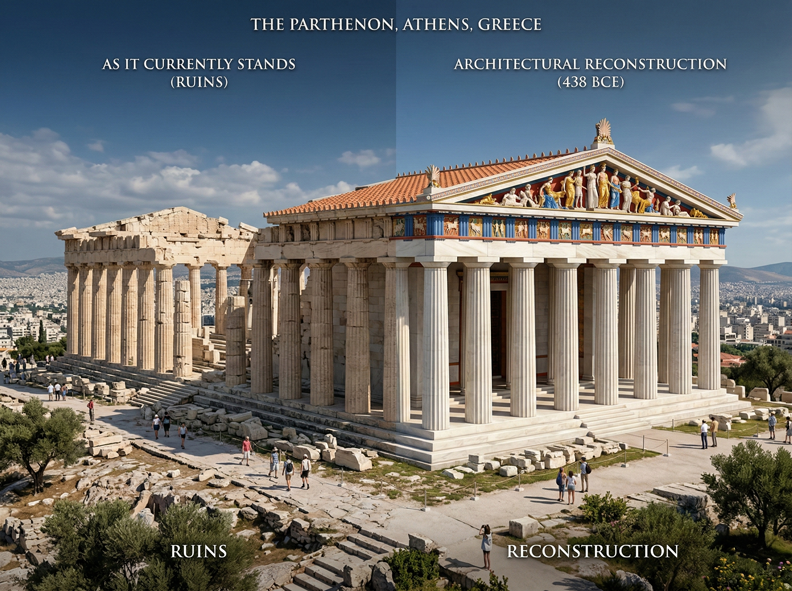
PURPOSE The project began with a broader question: how can digital environments open the door to richer and more effective learning experiences? The Parthenon became the ideal starting point not only because of its universal recognition, but also because it is impossible to encounter in its original state, and because architecture is best understood through space. Instead of relying only on reading or watching, visitors can learn through movement, observation, and discovery. By exploring at their own pace, they turn information into something more direct, engaging, and meaningful.
Project Name:
ALS-PARTHENON
Overview
The Parthenon, one of the most studied buildings in history,
remains difficult to fully grasp spatially through traditional media.
Our self-initiated Active Learning Space was designed to enhance
learning experiences through rigorous digital restoration and realtime
interaction, making knowledge more accessible, spatial, and
memorable.
Industry
Education:
Interactive
experiences
RELEASE DATE:
January 2026
APPROACH
- SOURCE BASED RECONSTRUCTION
Before becoming an explorable environment, the project had to become a clear and reliable body of knowledge. We studied archaeological records, architectural drawings, restoration studies, visual references, and interpretive material to define the basis of the reconstruction. - RESTORATION CRITERIA
Because every reconstruction involves interpretation, the process helped us distinguish what could be restored with confidence, what needed to remain schematic, and what had to be simplified to keep the experience clear and readable. - LEARNING FOCUS
The research was not only used to rebuild a monument, but to identify what visitors should be able to understand through
exploration: scale, proportion, spatial sequence, color, ornament, and the relationship between the temple and its setting.
IMPLEMENTATION
- DIGITAL RECONSTRUCTION
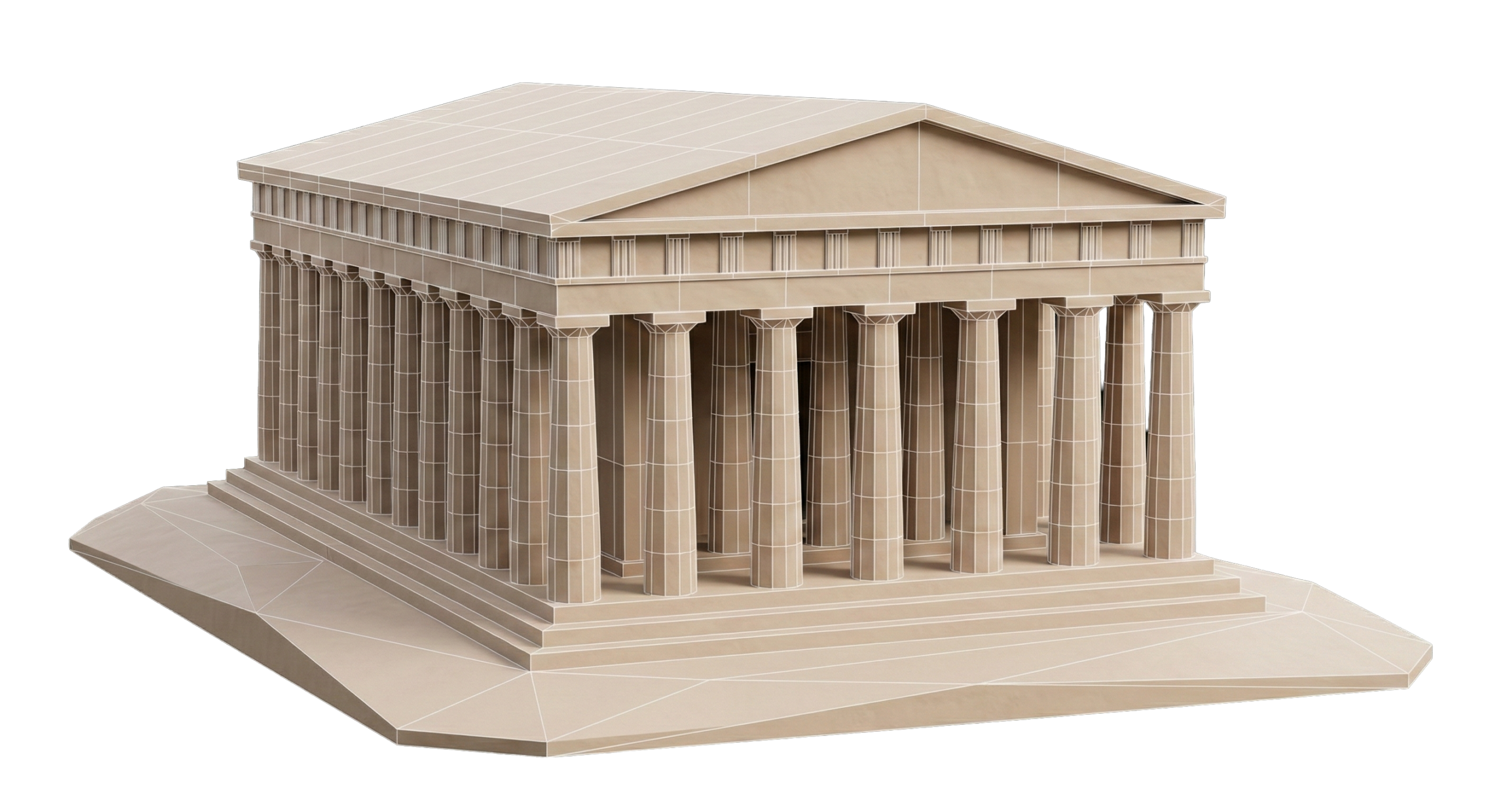
Using CAD based workflows and 3D modeling, we translated the research into a precise architectural reconstruction. The work extended beyond the temple itself, building a broader setting with surrounding structures, terrain, and environmental elements. - REAL TIME ENVIRONMENT
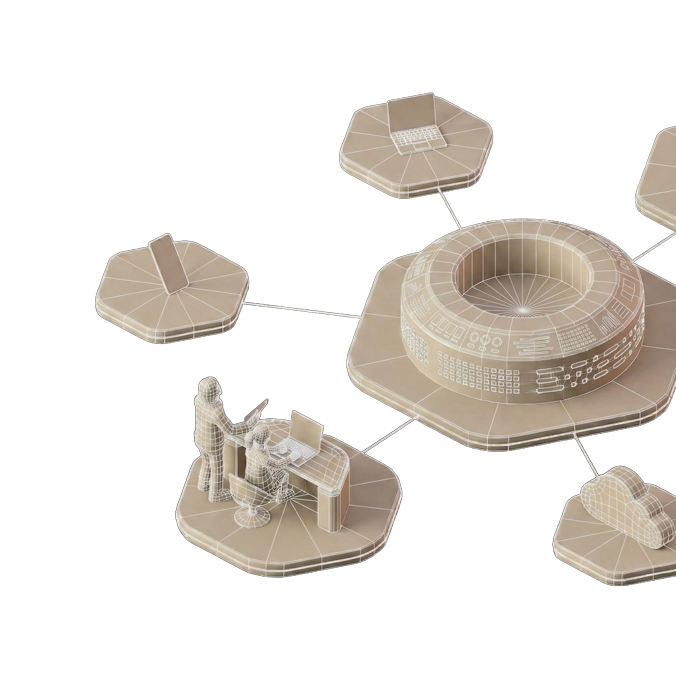
Once brought into Unreal Engine, the scene became a responsive environment shaped by lighting, materials, atmosphere, and curated assets. These elements were developed to support exploration without overwhelming the visitor. - INTERACTIVE SYSTEM
Using Unreal Engine’s Blueprint system, we built interactions connected to movement, pauses, viewpoints, and user choices.
The project was structured as more than a single walkthrough: it works as a flexible foundation that can grow over time through new interpretive layers, learning modules, sound, comparisons, and future formats such as desktop, web based access, or VR.
OUTCOME
- The result is a journey almost 2,500 years into the past, where visitors can enter the Parthenon not merely as a distant ruin, but as a place to explore. They can move, pause, observe, listen, and follow their own curiosity, while the environment keeps the visit clear and purposeful.The schematic Acropolis context is intentional: detailed enough to provide orientation, but restrained enough to keep attention on what matters most.Beneath that smooth exploration, several layers work together: spatial sequencing, visual cues, sound, contextual information, interaction logic, and interface decisions. Information appears where it becomes useful, connected to views, movement, architectural elements, and moments of attention.The better these layers work, the less visible they become making learning feel natural, as if discovery belonged to the place itself.